By Regina Shakespeare, Founder, My Billing Solution
Last updated: November 16, 2026
Covered today. Gone tomorrow. Back-dated next week.
AHCCCS eligibility changes all the time. Members get added, dropped, and moved between health plans, and coverage can be approved weeks after a visit and dated back to the start of that month. For a behavioral health facility seeing dozens or hundreds of AHCCCS patients, checking eligibility once at intake isn’t enough.
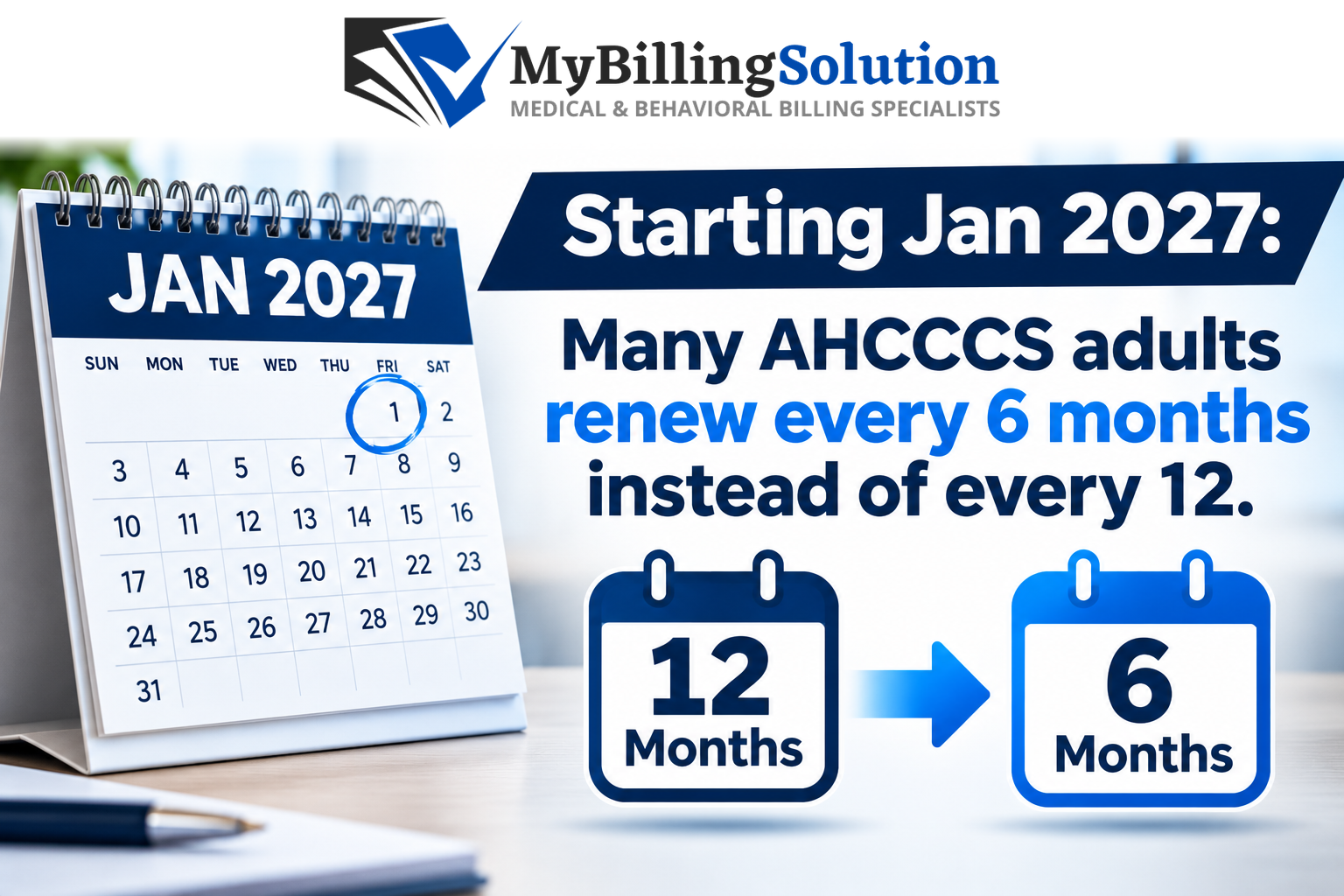
Starting January 2027, many AHCCCS adults will also move from annual renewals to renewals every six months, creating more changes for facilities to monitor.
For methadone clinics, detox centers, residential treatment facilities, and intensive outpatient programs (IOPs), missing an eligibility change can mean denied claims, delayed payments, or services that never get billed.
Key Takeaways
- AHCCCS members can be added, removed, or moved between health plans as their circumstances change.
- Coverage may be approved after services are provided and dated back, making some earlier visits eligible for billing.
- The first of the month is an important time to review coverage changes across a facility’s patient population.
- Beginning January 2027, many AHCCCS adults will face six-month renewals instead of annual renewals.
- Automated eligibility checks and weekly AHCCCS reports help facilities identify changes before they become billing problems.
Why Does AHCCCS Eligibility Change So Often?
AHCCCS eligibility changes because patient circumstances, coverage approvals, renewals, and health plan assignments do not remain the same throughout treatment. For behavioral health facilities serving large numbers of AHCCCS patients, these changes are part of everyday billing operations.
A patient may qualify for coverage when entering treatment but experience a change weeks or months later. Others may receive an approval after initially appearing uninsured. Patients who receive different services or move between treatment locations may also experience changes in their AHCCCS health plan assignments.
These changes can create problems when a facility continues submitting claims using outdated insurance information.
Consider a methadone clinic with hundreds of active patients. If eligibility is verified only when patients begin treatment, changes occurring during subsequent months may go unnoticed. A detox or residential facility faces similar challenges, although patient stays may be considerably shorter.
The result is often the same: claims are submitted using information that no longer matches the patient’s current coverage. For facilities operating at high patient volumes, even a small number of overlooked changes can create significant administrative work.
What Does It Mean When AHCCCS Coverage Is Back-Dated?
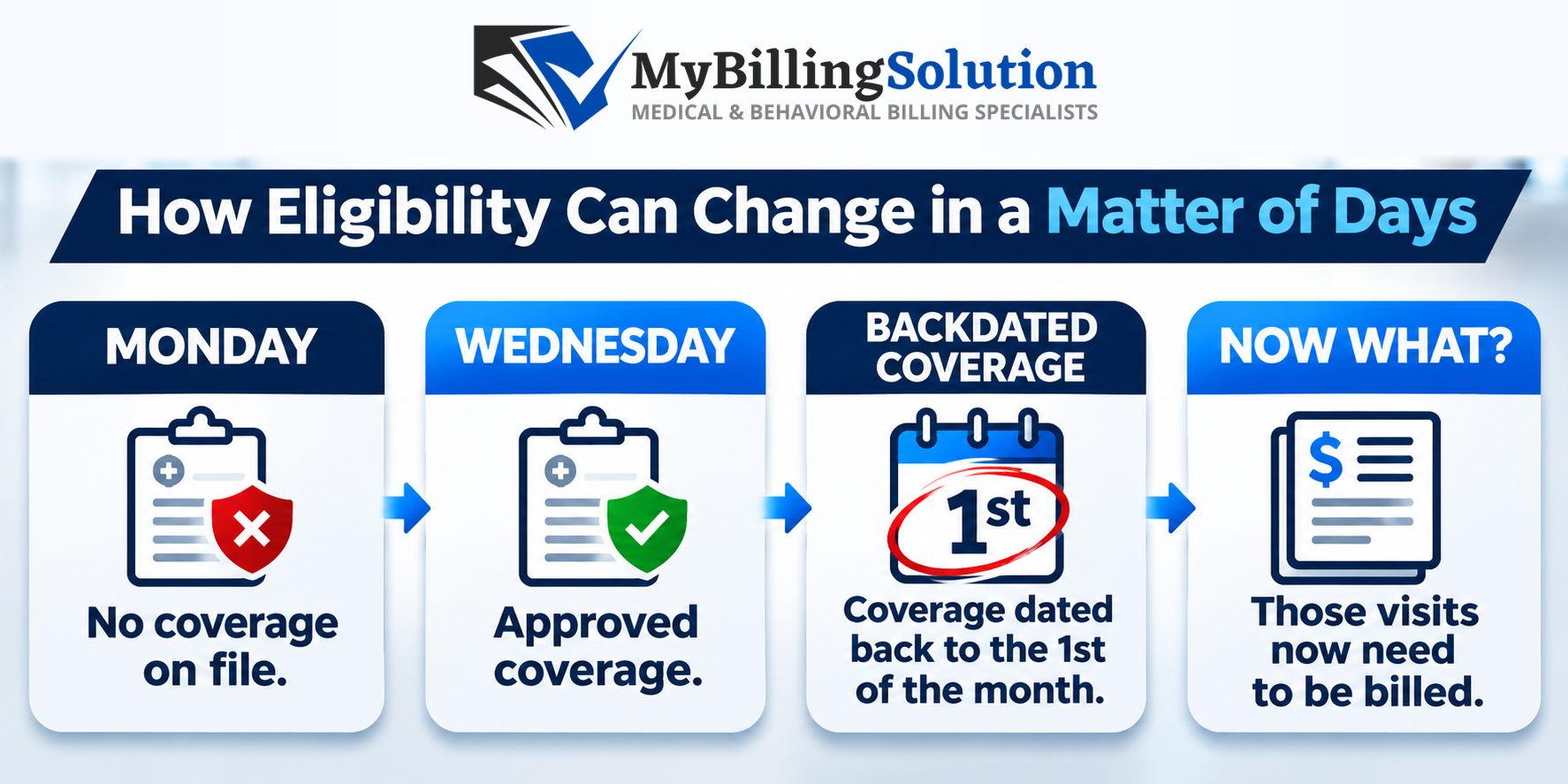
Back-dated coverage means an AHCCCS approval becomes effective before the date the approval was issued. Services provided during that eligible period may then qualify for reimbursement. This is particularly important for behavioral health facilities treating patients whose coverage is pending when services begin.
According to AHCCCS’s retroactive coverage guidelines, coverage for most newly-eligible adults begins on the first day of the month in which their Medicaid application is received.
For example, a patient could apply for AHCCCS on June 10 and receive approval in July. If the patient qualifies, coverage may become effective June 1. Services provided during that earlier period may now be eligible for billing.
Some groups, including eligible pregnant patients and children under 19, may qualify for coverage up to three months before the application month. This broader prior-quarter coverage does not generally apply to most newly eligible adults.
AHCCCS generally processes applications within 45 days, although timelines can vary depending on the eligibility program and required documentation.
The challenge for facilities is recognizing when previously uncovered dates of service become billable. Without ongoing eligibility monitoring, staff may never revisit those claims. That can leave legitimate reimbursement opportunities sitting unnoticed in the facility’s billing records.
Why Does the First of the Month Matter for AHCCCS Eligibility?
What we see: The beginning of each month is an especially important time for AHCCCS eligibility verification because facilities often discover coverage and health plan changes around that date. A patient’s eligibility information may look different on the first of the month than it did during the previous week. For a facility with hundreds of active patients, reviewing these changes individually can become a substantial administrative responsibility.
A billing department already managing daily claims and denial follow-up may struggle to complete a full eligibility review. Unfortunately, waiting until claims are denied means staff must spend additional time identifying and correcting problems that might have been caught earlier.
A consistent first-of-month eligibility review helps facilities identify changes while there is still an opportunity to update billing records. That review should complement regular checks throughout the month rather than replace them.
Facilities that make eligibility verification part of their normal billing process are better positioned to identify plan changes, newly approved coverage, and potential claim issues before they grow into larger accounts receivable problems.
What’s Changing With AHCCCS in 2027?
Beginning January 1, 2027, new federal Medicaid requirements will affect eligibility renewals and work-related reporting for certain AHCCCS adults. Under H.R. 1, many adults ages 19 to 64 enrolled through Medicaid expansion will move from annual eligibility renewals to renewals every six months.
Some members will also need to meet community engagement requirements, which may include at least 80 hours per month of qualifying activities such as employment, education, or volunteering. A qualifying monthly income threshold is another way some members may meet the requirement.
According to KJZZ’s September 2026 reporting, approximately 417,000 AHCCCS members could be affected by the new work requirements. This is particularly relevant to behavioral health facilities.
KFF research on Medicaid and substance use disorders found that approximately 61% of Medicaid-covered adults diagnosed with opioid use disorder qualify through Medicaid expansion.
What about patients receiving substance use treatment?
Federal law includes exemptions from work requirements for people with substance use disorders and people receiving substance use treatment. However, facilities should not assume every patient’s exemption has already been identified in the AHCCCS eligibility system. AHCCCS may need to verify eligibility information or request additional documentation.
Implementation guidance is continuing to develop, including changes related to a recent federal court decision on medical-frailty exemptions. The renewal transition also won’t happen for everyone at once.
Members who complete their annual renewal during 2026 will generally remain on that 12-month schedule until their next renewal in 2027. After that, affected members move to the six-month schedule.
For facility administrators, these changes make ongoing eligibility monitoring increasingly important. Facilities should follow official updates through KeepMyAHCCCS.com and encourage patients to keep their contact information current so they receive important renewal notices.
How Often Should a Facility Check AHCCCS Eligibility?
Behavioral health facilities should verify AHCCCS eligibility at admission, before claims are submitted, through a complete weekly review, and again shortly after the first of each month. Checking eligibility only at intake creates unnecessary risk, particularly for facilities providing services over extended periods.
A practical verification schedule includes:
- At admission or intake: Confirm active coverage and identify the patient’s assigned AHCCCS health plan.
- Before claims are submitted: Make sure the billing information matches coverage for the dates of service.
- Every week: Review the active patient population for changes in eligibility and health plan assignments.
- After the first of each month: Complete another review to identify newly effective coverage changes.
Facilities should also revisit previously uncovered dates of service when patients receive new eligibility approvals. The purpose isn’t to create more administrative tasks. It’s to prevent overlooked changes from becoming expensive billing problems.
For high-volume treatment facilities, a consistent process is much more reliable than checking coverage whenever someone has extra time.

What Do Automated Eligibility Checks and Weekly Reports Look Like?
Automated eligibility checks allow facilities to review coverage for hundreds of patients in a fraction of the time manual verification could require. At My Billing Solution, we can check eligibility for hundreds of patients in under 20 minutes.
For a busy methadone clinic, residential treatment center, or detox facility, that capability can reduce the amount of staff time spent on repetitive coverage verification. We also provide weekly AHCCCS eligibility reports so facilities can stay informed about changes affecting their patient populations.These reports help identify issues that need attention before claims are submitted or older billing opportunities are overlooked.
In our article, Why In-House Billing Breaks Down at Methadone Clinics, we explain how high patient volume and outdated billing processes can leave even fully staffed departments struggling to keep up. Eligibility verification is one of the most important parts of that workload.
By combining automated checks with consistent follow-up, facilities can spend less time correcting preventable errors and more time addressing outstanding claims.
For Arizona behavioral health facilities handling substantial patient volume, reliable billing and collections services can make a meaningful difference in keeping claims organized and coverage information current.
Run a methadone clinic, detox center, residential treatment facility, or IOP in Arizona?
Request a Free Revenue Analysis from My Billing Solution. We’ll help you understand where your facility’s billing stands and identify potential gaps in eligibility verification and claim follow-up.
Call (480) 369-3090 to learn more.
Frequently Asked Questions
How far back can AHCCCS coverage be back-dated?
For most newly eligible adults, AHCCCS coverage generally begins on the first day of the application month, even when approval comes later. Certain eligible groups, including pregnant patients and children under 19, may qualify for coverage during the three months before the application month.
When do AHCCCS six-month renewals start?
Six-month renewals begin January 1, 2027, for affected adults enrolled through Medicaid expansion. Members who renew during 2026 generally remain on their existing annual renewal schedule until their next renewal in 2027.
Are AHCCCS members in substance use treatment exempt from work requirements?
Federal law includes exemptions for people with substance use disorders and those receiving substance use treatment. AHCCCS may use existing records to verify exemptions or request additional information when needed. Members should follow official instructions at KeepMyAHCCCS.com.
Why do AHCCCS patients switch health plans?
Health plan assignments can change because of eligibility updates, enrollment decisions, or changes in a patient’s circumstances and service needs. Facilities should regularly verify both active AHCCCS coverage and the health plan responsible for the services provided.